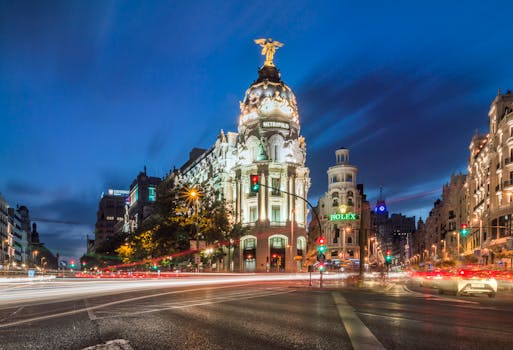
✓ Adolfo Suárez Madrid–Barajas Airport (MAD) is Spain's largest airport.
✓ Major car rental companies have desks in Terminals 1 and 4.
✓ Booking in advance often secures better rates and vehicle availability.
✓ International Driving Permit (IDP) is recommended for non-EU drivers.
How It Works
1
Pre-Book Your Vehicle
Compare prices and vehicle types online from various providers before your arrival. This ensures availability and often provides better deals than last-minute bookings.
2
Locate Rental Desk at MAD
Upon arrival at Madrid-Barajas, follow signs for 'Car Rental' or 'Alquiler de Coches'. Desks are typically in the arrivals halls of Terminals 1 and 4.
3
Complete Paperwork & Inspect
Present your booking confirmation, driver's license, passport, and credit card. Thoroughly inspect the vehicle for existing damage before driving off.
4
Enjoy Your Madrid Journey
Drive off from the airport, ready to explore Madrid and the surrounding regions at your own pace. Remember to familiarize yourself with local driving rules.
Why Choose Car Rental Madrid Airport for Your Spanish Adventure?
Madrid, a city teeming with vibrant culture, historic landmarks, and culinary delights, serves as an incredible gateway to Spain. While its public transportation system is efficient, opting for a car rental Madrid airport service upon your arrival at Adolfo Suárez Madrid–Barajas Airport (MAD) offers unparalleled freedom and flexibility, transforming your travel experience. Imagine seamlessly transitioning from your flight to the open road, ready to explore not just the bustling capital but also the charming towns, scenic landscapes, and hidden gems of the surrounding regions like Toledo, Segovia, or the Sierra de Guadarrama. Public transport, while excellent for city-center exploration, often falls short when you desire to venture into less accessible areas or simply prefer the convenience of door-to-door travel without adhering to schedules.
One of the primary benefits of securing your vehicle directly at the airport is the immediate commencement of your journey. There's no need to navigate with luggage through unknown public transport systems or pay for expensive taxi transfers to an off-airport rental location. The major car rental companies, such as Avis, Hertz, Europcar, Sixt, Budget, and Enterprise, all have convenient desks located within Terminals 1 and 4 of Madrid-Barajas Airport, making the pick-up process straightforward and efficient. This immediate access allows you to bypass potential delays, especially after a long flight, and head directly to your accommodation or your first Spanish destination. Furthermore, having your own vehicle provides immense flexibility for day trips. Want to spontaneously visit the Royal Palace of Aranjuez or the ancient city of Ávila? With a rental car, these excursions become effortless possibilities rather than logistical puzzles. It also offers the convenience of carrying luggage, shopping, or sports equipment without hassle, making it ideal for families, groups, or those planning extended stays. This freedom extends to dining experiences, allowing you to discover authentic local eateries outside the main tourist hubs that might be difficult to reach otherwise. Considering a car rental for your trip to Spain is often the most practical and enjoyable way to truly immerse yourself in all the country has to offer, particularly when starting your journey right from Madrid's main international airport.
Navigating Your Car Hire Options at Adolfo Suárez Madrid–Barajas Airport (MAD)
Adolfo Suárez Madrid–Barajas Airport is a large and modern facility, handling millions of passengers annually. Consequently, it hosts a comprehensive array of car rental providers to meet diverse traveler needs. Understanding where to find these services and what to expect is crucial for a smooth pick-up experience. The main car rental desks are primarily located in Terminal 1 (T1) and Terminal 4 (T4) of the airport.
In Terminal 1, you'll find counters for major international brands such as Avis, Budget, Enterprise, Europcar, Hertz, and Sixt. These desks are typically situated in the arrivals hall, making them easily accessible after you've collected your luggage. The parking for these rental cars is usually a short walk from the terminal building, often within a dedicated section of the airport's car park. Clear signage in English and Spanish will direct you. Similarly, in Terminal 4, which is the newest and largest terminal, you will find a similar selection of rental companies. Their offices are also conveniently located within the arrivals area, and the vehicles are parked in an adjacent car park, often directly connected to the terminal via a pedestrian walkway or shuttle. It's always advisable to check your booking confirmation for the exact terminal and location of your chosen provider, as some smaller or local companies might operate slightly differently, perhaps requiring a short shuttle bus ride to an off-site depot.
When booking your car rental Madrid airport, consider the size of your party and the amount of luggage you'll have. While a compact car might be economical, it could be uncomfortable for four people with multiple suitcases. For longer journeys or more passengers, a mid-size sedan, SUV, or even a minivan might be a better fit. Additionally, think about your driving preferences. Do you prefer an automatic transmission? While increasingly common, manual cars are still prevalent in Spain and often cheaper to rent. Be sure to specify your transmission preference during the booking process. Lastly, familiarizing yourself with the different fuel types (gasoline/petrol or diesel) and ensuring you know which one your rental car uses is a small but important detail that can save you hassle at the pump. Many rental companies offer a 'full-to-full' fuel policy, meaning you pick up the car with a full tank and return it full, avoiding extra charges.
Essential Tips for a Smooth Car Rental Madrid Airport Experience
Securing a car rental Madrid airport can be straightforward, but a few key tips can significantly enhance your experience and help avoid common pitfalls. Firstly, and perhaps most importantly, *book well in advance*. Especially during peak travel seasons like summer, Easter, or major holidays, demand for rental cars can skyrocket, leading to higher prices and limited availability of desired vehicle types. Booking several weeks or even months ahead can secure better rates and ensure you get the car that best suits your needs. Secondly, *understand the insurance options*. Basic third-party liability insurance is usually included, but consider additional coverage like Collision Damage Waiver (CDW) or Theft Protection (TP). These often come with an excess (deductible), so assess whether you want to purchase a 'zero excess' option, either from the rental company or an independent insurer. Always read the fine print regarding insurance to avoid surprises.
Thirdly, *bring all necessary documents*. This includes your valid driver's license (held for at least one year, sometimes two), your passport, your booking confirmation, and a credit card in the main driver's name for the security deposit. For non-EU citizens, an International Driving Permit (IDP) is highly recommended, and in some cases, legally required, even if your national license is in English. While some companies might accept your home license, it's safer to have an IDP to avoid any issues with local authorities or the rental agency. Fourthly, *conduct a thorough inspection of the vehicle before leaving the lot*. Take photos or videos of any existing dents, scratches, or interior damage, no matter how minor, and ensure they are noted on your rental agreement. This protects you from being charged for pre-existing damage upon return. Fifthly, *familiarize yourself with Spanish road rules and signs*. Spain drives on the right, and speed limits are generally 120 km/h on motorways, 90 km/h on national roads, and 50 km/h in urban areas unless otherwise signposted. Pay attention to Zonas de Bajas Emisiones (ZBE) or Low Emission Zones, particularly in Madrid city center, which restrict access for certain vehicles. A GPS or a reliable navigation app on your smartphone is invaluable, especially for navigating busy city streets and complex motorway junctions. Many rental cars offer built-in GPS, or you can opt for a portable device. Lastly, plan your return carefully. Know the exact return location at the airport, factor in time for refueling if on a full-to-full policy, and allow extra time for potential traffic or unexpected delays, especially if you have a flight to catch. For more detailed information on driving in Spain, you can consult official government tourism sites or reputable travel guides, which often provide comprehensive advice on vehicle rental and road regulations.
Driving in Madrid and Beyond: Navigating Spanish Roads with Your Rental
Once you've picked up your car rental Madrid airport, the adventure truly begins. However, driving in a new country, especially around a major European capital, requires some preparation and awareness of local customs and regulations. Madrid's road network is extensive, well-maintained, and generally easy to navigate with a GPS. The main arteries, such as the M-30 and M-40 ring roads, efficiently connect different parts of the city and lead to major national highways (A-roads) that branch out across Spain.
One crucial aspect to be aware of is Madrid's Low Emission Zone (ZBE - Zona de Bajas Emisiones). This zone, covering the central areas of the city, restricts access to certain vehicles based on their environmental label (Distintivo Ambiental or 'pegatina'). Most modern rental cars will have the appropriate C or ECO label, allowing access, but it's essential to confirm this with your rental provider, especially if you plan to drive into the city center. Fines for non-compliance can be substantial. Parking in Madrid can also be a challenge. Street parking is often metered (blue or green zones) with time limits. It's usually more convenient and often safer to use underground public car parks, which are plentiful but can be expensive. For visits to the city center, consider parking on the outskirts and using Madrid's excellent public transport system for inner-city travel.
Beyond Madrid, driving through Spain is a delight. The country boasts an excellent motorway network (Autopistas - AP and Autovías - A). Autopistas are often toll roads (indicated by 'AP' in their designation), while Autovías are generally free. Tolls can be paid by cash or credit card. Speed cameras are common, so adhere to speed limits. A general rule of thumb: 120 km/h on motorways, 90 km/h on national roads, and 50 km/h in urban areas. Always be mindful of roundabouts, which are very prevalent in Spain; traffic already in the roundabout has priority. Remember to carry your driver's license, passport, rental agreement, and insurance documents at all times. In case of a breakdown or accident, all vehicles in Spain are required to carry a reflective vest and two warning triangles, which should be provided by your rental company. Knowing how to use them is important for your safety. With a little preparation and awareness, driving your car rental from Madrid airport will be an enjoyable and integral part of your Spanish journey, allowing you to discover the country's diverse beauty at your own pace and schedule.
Comparison
Feature
Best Option (Pre-booked Online)
Alternative 1 (Walk-in at Airport)
Alternative 2 (Off-site Rental)
Price
Most competitive, often with discounts
Higher, subject to availability
Potentially cheaper, but with hidden costs
Availability
Guaranteed vehicle type
Limited choice, especially peak season
Good, but requires shuttle
Convenience
Seamless airport pick-up
Immediate, but slower processing if busy
Requires shuttle bus transfer
Time Efficiency
Quickest from flight to road
Variable, depends on queues
Adds 30-60 minutes to journey
Transparency
Clear terms, pre-selected extras
Pressure to upsell at counter
May have less known local providers
What Readers Say
★★★★★
"Booking my car rental Madrid airport was incredibly easy through their website. The pick-up at T4 was smooth, and the car was perfect for my trip to Segovia. No hidden fees, just great service!"
Maria G. · Valencia, Spain
★★★★★
"First time renting from Madrid-Barajas. The instructions were clear, the staff were helpful, and I was on the road within 30 minutes of landing. Highly recommend for stress-free travel."
John D. · London, UK
★★★★★
"I needed an automatic for my family trip, and booking in advance ensured I got exactly that. The car rental Madrid airport experience saved us so much time and allowed us to explore beyond the city center easily."
Sophia L. · New York, USA
★★★★★
"The process was mostly good, but there was a slight wait at the counter. However, the car was clean and comfortable, and the return was very efficient. Would use this service again for my next visit."
Carlos R. · Mexico City, Mexico
★★★★★
"As an international traveler, having an IDP and booking ahead made my car rental Madrid airport pick-up a breeze. It was fantastic to have the freedom to visit small villages in the countryside."
Emily S. · Sydney, Australia
Frequently Asked Questions
What documents do I need to rent a car at Madrid Airport?
You will typically need a valid driver's license (held for at least 1-2 years), your passport or national ID, a credit card in the main driver's name for the security deposit, and your booking confirmation. Non-EU citizens should also carry an International Driving Permit (IDP).
Is it cheaper to rent a car at Madrid Airport or in the city?
Generally, it is often more convenient and sometimes cheaper to rent directly at Madrid Airport due to competition among providers and the ease of immediate pick-up. City center rentals might have fewer options and require extra travel costs to reach.
How do I find the car rental desks at Madrid-Barajas Airport?
Upon arrival at Madrid-Barajas Airport (MAD), follow the clear signs for 'Car Rental' or 'Alquiler de Coches'. Most major companies have desks in the arrivals halls of Terminals 1 and 4. Check your booking confirmation for the exact terminal and location.
What kind of insurance should I get for my car rental in Madrid?
Basic third-party liability insurance is usually included. It's highly recommended to consider additional coverage like a Collision Damage Waiver (CDW) or Theft Protection (TP), often with a 'zero excess' option, to minimize your financial liability in case of damage or theft.
Can I drive into Madrid's city center with a rental car?
Madrid has a Low Emission Zone (ZBE) in its central areas. Most modern rental cars will have the necessary environmental label (C or ECO) allowing access, but always confirm this with your rental company if you plan to drive into the restricted zones to avoid fines.
Who should consider car rental Madrid airport?
Car rental at Madrid airport is ideal for travelers planning to explore beyond the immediate city center, families or groups needing space for luggage, those on business trips with multiple destinations, or anyone who values flexibility and convenience over public transport schedules.
What should I do if my rental car breaks down in Spain?
In case of a breakdown or accident, first ensure your safety. Most rental agreements include roadside assistance; contact the rental company using the number provided in your documents. Also, remember that Spanish law requires you to carry a reflective vest and two warning triangles in the car.
Are electric or hybrid car rentals available at Madrid Airport?
Yes, as sustainability becomes more prominent, many major car rental companies at Madrid Airport are increasing their fleet of electric and hybrid vehicles. It's advisable to specify this preference when booking if you are interested in an eco-friendly option.
Ready to unlock the full potential of your Spanish adventure? Secure your car rental Madrid airport today and embark on a journey of discovery, flexibility, and unparalleled convenience. Don't let public transport dictate your itinerary – take control and explore Spain on your terms.