
Rent a Car Spain for Tourists: Your Ultimate Freedom Guide
rent a car Spain for tourists

Rent a Car Spain for Tourists: Your Ultimate Freedom Guide

Experience Spain's stunning landscapes and hidden gems at your own pace with the perfect rental car.

Find Your Spanish Ride Now!

Key Takeaways

  • ✓ International Driving Permit (IDP) is legally required for non-EU drivers.
  • ✓ Minimum age for rental is typically 21, with surcharges for drivers under 25.
  • ✓ Manual transmission cars are standard; automatic cars are available but cost more.
  • ✓ Zero-excess insurance is highly recommended for peace of mind.

How It Works

1
Plan Your Route & Dates

Determine your travel itinerary and exact dates. This helps you choose the right car size and book in advance for better rates and availability.

2
Compare Rental Companies & Deals

Use comparison websites to scout offers from major international brands and local Spanish providers. Pay close attention to included features and hidden fees.

3
Understand Insurance Options

Familiarize yourself with different insurance types like Collision Damage Waiver (CDW) and Theft Protection (TP). Consider third-party excess insurance for comprehensive coverage.

4
Pick Up Your Vehicle & Inspect

At the counter, present your documents (passport, IDP, license, credit card). Thoroughly inspect the car for existing damage before driving off and document everything.

Why Rent a Car in Spain for Your Tourist Adventure?

Explore the rugged beauty of Valle Gran Rey, Canary Islands, with its distinctive rock formations and winding roads. Photo: Liisbet Luup / Pexels
Spain is a country of incredible diversity, boasting sun-drenched coastlines, ancient cities, majestic mountain ranges, and charming, off-the-beaten-path villages. While its public transport network is efficient for inter-city travel, relying solely on trains and buses often means missing out on the true essence of the Iberian Peninsula. To truly experience Spain's hidden gems and embrace the spontaneous detours that make for unforgettable journeys, the ability to rent a car in Spain becomes not just a convenience, but a necessity. Imagine driving through the rolling vineyards of La Rioja, stopping at a small bodega for a tasting, or navigating the winding roads of Andalusia's 'Pueblos Blancos' (white villages) at your leisure. These experiences are simply not feasible when constrained by rigid bus schedules or train routes. A rental car provides unparalleled freedom and flexibility, allowing you to craft your own itinerary, linger longer in places you love, and discover locales untouched by mass tourism. It transforms a structured vacation into an authentic adventure. Moreover, for families traveling with children or groups with significant luggage, a rental car offers practical advantages that public transport cannot match. The convenience of having your bags securely stowed in the trunk, the ability to stop for snack breaks or bathroom stops whenever needed, and the comfort of a private space all contribute to a more relaxed and enjoyable trip. Think about the ease of transporting surfboards to the Basque coast, hiking gear to the Picos de Europa, or simply the extra space for all those Spanish souvenirs. Beyond the practicalities, there's an undeniable romance to a road trip through Spain. The ever-changing scenery, from the arid plains of Extremadura to the lush green landscapes of Galicia, unfolds before you, offering a continuous feast for the eyes. You can chase sunsets along the Costa del Sol, explore Roman ruins in Mérida, or even venture into the Sierra Nevada mountains, all without the logistical headaches of coordinating multiple transport links. This freedom to explore, to follow your own whims, and to truly immerse yourself in the Spanish way of life is the most compelling reason to consider a rental car for your next Spanish holiday. It's an investment in experiences, memories, and the sheer joy of discovery.

Essential Requirements and Documentation for Renting a Car in Spain

Image of two Ukrainian passports on a white surface, highlighting travel and identification themes. Photo: Borys Zaitsev / Pexels
Before you even start comparing prices for your rental car in Spain, it's crucial to understand the essential requirements and documentation you'll need. Failing to meet these can lead to significant delays or even outright refusal of your rental, putting a dampener on your travel plans. First and foremost, a valid driving license from your home country is indispensable. This license must be current and held for a minimum period, usually one year, though some premium car categories might require two years. Always check the specific terms and conditions of your chosen rental company, as these can vary. For non-EU citizens, an International Driving Permit (IDP) is a legal requirement when driving in Spain. This is not a standalone license but a translation of your national license into several languages, recognized by over 150 countries. You must carry both your national driving license and your IDP at all times while driving. Obtaining an IDP is a straightforward process, typically available through your national automobile association, and it's vital to secure it before your departure. Age restrictions are another key consideration. The minimum age to rent a car in Spain is generally 21 years old. However, most rental companies impose a 'young driver' surcharge for individuals under 25. This fee can vary significantly between providers and can add a substantial amount to your total rental cost, so factor this into your budget. For certain luxury or larger vehicle categories, the minimum age might even be higher, sometimes 25 or 26. There's usually no upper age limit, but some companies might require a medical certificate for very senior drivers, though this is less common. A valid credit card in the primary driver's name is also absolutely essential. Debit cards are almost universally not accepted for the security deposit, as rental companies need to pre-authorize a significant amount (often hundreds or even thousands of euros) to cover potential damages, fuel, or traffic fines. This deposit is released after the car is returned in good condition. Ensure your credit card has sufficient available credit for this hold. Finally, a valid passport or national ID card is required for identification purposes. Always have all these documents readily accessible when picking up your rental car to ensure a smooth and efficient process. Being prepared will save you time and stress at the rental counter, allowing you to hit the Spanish roads sooner.

Navigating Insurance, Fuel Policies, and Road Rules in Spain
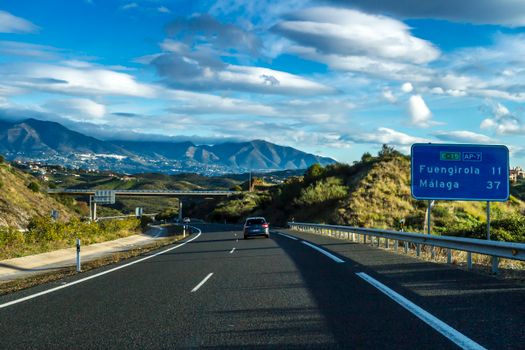
Beautiful view of AP-7 highway near Fuengirola and Málaga, with distant mountains under a blue sky. Photo: ricfer / Pexels
Understanding the intricacies of car rental insurance, fuel policies, and local road rules is paramount to a stress-free driving experience in Spain. When it comes to insurance, the basic Collision Damage Waiver (CDW) and Theft Protection (TP) are usually included in the rental price, but these often come with a high excess (deductible), meaning you're liable for the first portion of any repair costs. For complete peace of mind, consider upgrading to a 'Super CDW' or 'Zero Excess' policy directly with the rental company, or purchasing a standalone excess insurance policy from a third-party provider. The latter can often be more cost-effective. This type of insurance covers the excess amount, so in the event of damage, you pay the rental company, and your independent policy reimburses you. Always read the fine print, especially regarding coverage for tires, windows, undercarriage, and mirrors, as these are often excluded from basic CDW. Comprehensive car rental insurance is a wise investment to protect against unforeseen incidents. Fuel policies can be a point of contention if not understood clearly. The most common and generally fairest policy is 'Full to Full,' where you receive the car with a full tank and return it full. Any missing fuel will be charged at a premium rate by the rental company, plus a refueling fee. Avoid 'Full to Empty' or 'Pre-purchase' options, where you pay for a full tank upfront and are encouraged to return it empty; you rarely use all the fuel, and the initial price per liter is often inflated. 'Same to Same' is also common, where the fuel level upon pick-up must match the level upon return. Always confirm the fuel type (gasolina/petrol or diésel/diesel) for your vehicle, as misfuelling can lead to significant damage and costs. Spain's road rules are similar to much of continental Europe. You drive on the right-hand side of the road, and overtaking is done on the left. Speed limits are generally 120 km/h (75 mph) on motorways (autopistas/autovías), 90 km/h (56 mph) on main roads, and 50 km/h (31 mph) in urban areas, unless otherwise signposted. Pay close attention to traffic signs, especially those indicating 'STOP' (Pare), 'NO ENTRY' (Prohibida la entrada), and 'YIELD' (Ceda el paso). Roundabouts are common, and vehicles already in the roundabout have priority. Seatbelts are mandatory for all occupants. Children under 12 or shorter than 135cm must use an appropriate child restraint system. Mobile phone use while driving is strictly prohibited, even hands-free, unless using a fully integrated vehicle system. Fines for traffic violations can be hefty, and rental companies will pass these charges on to you, often with an additional administrative fee. Be aware of ZBE (Zonas de Bajas Emisiones) or Low Emission Zones in major cities like Madrid and Barcelona; you may need a special environmental sticker for your vehicle, or face restrictions. Most rental cars will have the appropriate sticker, but it's worth confirming. Always carry your driving license, IDP, passport, and rental agreement while driving.

Top Tips and Common Mistakes to Avoid When You Rent a Car in Spain for Tourists

Close-up of a classic vintage car dashboard featuring an analog radio, speedometer, and keys. Photo: Pragyan Bezbaruah / Pexels
Renting a car in Spain can be an incredibly rewarding experience, but a few strategic tips and an awareness of common pitfalls can significantly enhance your trip. Here's how to ensure a smooth journey: * **Book in Advance, Especially for Peak Season:** The earlier you book, the better the rates and selection, particularly if you're traveling during summer, Easter, or major holidays. Last-minute bookings often mean higher prices and limited availability, especially for automatic transmission cars. * **Compare Across Platforms:** Don't just stick to one rental company. Use reputable comparison websites (e.g., Kayak, Skyscanner, Rentalcars.com) but also check the direct websites of major providers like Hertz, Avis, Europcar, and local Spanish companies like Goldcar or Centauro. Sometimes direct bookings offer better deals or specific promotions. * **Understand the Fuel Policy:** As mentioned, 'Full to Full' is generally the most economical. Avoid policies that charge you for a full tank upfront and ask you to return it empty, as you'll almost certainly overpay. * **Inspect the Car Thoroughly:** Before driving off, take photos or videos of every scratch, dent, or imperfection, inside and out. Ensure the rental agent notes all existing damage on the pick-up form. This protects you from being charged for pre-existing issues upon return. * **Consider a Smaller Car:** Many Spanish towns, especially older ones, have narrow, winding streets. A smaller car is easier to maneuver and park, making your driving experience much less stressful. * **GPS is Your Friend:** While your phone's GPS can work, a dedicated GPS unit (often an optional extra) can be more reliable in areas with patchy mobile signal. Download offline maps for your phone as a backup. * **Be Aware of Tolls (Peajes):** Spain has both toll and non-toll motorways. Toll roads (AP-x) are faster but come at a cost. Non-toll roads (A-x) are free but can be slower. Plan your route accordingly. You can pay tolls with cash or credit card, or use an electronic 'Via-T' device if your rental car has one. * **Parking Can Be Tricky:** In cities, parking can be scarce and expensive. Look for underground parking garages (aparcamientos subterráneos) or park-and-ride options on the outskirts. Blue zones (zona azul) require payment, typically via a machine, for limited periods. Green zones (zona verde) are often for residents only. * **Roadside Assistance:** Confirm what roadside assistance is included in your rental. Knowing who to call in case of a breakdown or accident is crucial. **Common Mistakes to Avoid:** * **Skipping the IDP:** Non-EU drivers often overlook this, leading to fines or rental refusal. * **Not Budgeting for Young Driver Surcharges:** These can add a significant amount to your total cost if you're under 25. * **Ignoring Insurance Excess:** Relying only on basic CDW can leave you vulnerable to high out-of-pocket costs in case of damage. * **Not Documenting Car Condition:** This is a major source of disputes between renters and companies. * **Misfuelling:** Always double-check the fuel type before filling up. * **Driving in Low Emission Zones Without a Sticker:** Can result in fines, especially in major cities.

Comparison

FeatureBest Option for TouristsBudget-Friendly OptionLuxury/Comfort Option
Car SizeCompact/Economy (e.g., Seat Ibiza)Mini (e.g., Fiat 500)Mid-size SUV/Sedan (e.g., VW Tiguan)
TransmissionManual (more common, cheaper)ManualAutomatic (more comfort, higher price)
InsuranceZero Excess / Super CDWBasic CDW with independent excess insuranceFull comprehensive directly with rental co.
Fuel PolicyFull to FullFull to FullFull to Full
Pick-up LocationAirport (convenient, wider choice)Downtown (may save airport fees)Airport or premium city location
Typical Driver Age25+21-24 (with surcharge)25+

What Readers Say

"Renting a car in Spain for our Andalusia trip was the best decision! We explored so many hidden 'pueblos blancos' that we would have missed otherwise. The freedom was incredible."

Sarah J. · London, UK

"As an Australian, getting the IDP was easy, and having a car allowed us to truly discover the Basque Country at our own pace. Highly recommend for any tourist in Spain."

Mark P. · Sydney, Australia

"We booked a compact automatic for our family of four, and it made navigating Catalonia a breeze. We covered Barcelona to Girona and the Costa Brava with such ease, creating lasting memories."

Elena R. · New York, USA

"The rental process was straightforward, though the young driver surcharge was a bit steep. Still, it was worth it for the flexibility to explore the Costa del Sol and beyond."

David M. · Dublin, Ireland

"Our road trip through Spain's wine regions was a dream come true thanks to our rental car. We could stop at any vineyard we liked, making our tourist experience truly bespoke."

Jessica L. · Toronto, Canada

Frequently Asked Questions

Is an International Driving Permit (IDP) truly necessary for tourists to rent a car in Spain?

Yes, for any non-EU citizen, an International Driving Permit (IDP) is a legal requirement when driving in Spain. It serves as an official translation of your national driving license and must be carried alongside your original license. Failure to produce both documents if stopped by authorities can result in significant fines and potential issues with your rental agreement.

What happens if I get a traffic fine while renting a car in Spain?

If you incur a traffic fine (e.g., speeding, illegal parking), the rental company will typically receive the notification from the Spanish authorities. They will then charge the fine amount to your credit card on file, often adding an administrative fee for processing. It's crucial to settle these promptly to avoid further penalties or issues on future rentals.

How do I choose the right type of car for my trip to Spain?

Consider your group size, luggage, and planned itinerary. For city driving and narrow village roads, a compact or economy car is ideal. For longer distances, comfort, or if you have more luggage, a mid-size or SUV might be better. If you're planning mountain drives, a car with more power can be beneficial. Also, decide if you prefer manual (more common and cheaper) or automatic transmission.

Are rental cars in Spain expensive, and how can I get the best deal?

Car rental prices in Spain vary widely based on season, car type, duration, and booking lead time. To get the best deal, book well in advance, especially for peak seasons. Compare prices across multiple platforms and direct rental company websites. Be vigilant about hidden fees, understand the fuel policy, and consider third-party excess insurance as a cost-effective alternative to rental company's full coverage.

Should I rent a car directly at the airport or in the city center?

Renting at the airport is often more convenient, especially after a long flight, as most major rental companies have desks there, offering a wider selection of vehicles. However, airport rentals can sometimes incur additional surcharges. City center pick-up might be slightly cheaper but could involve more logistical challenges, like getting to the office with luggage. Weigh convenience against potential cost savings.

Who should definitely rent a car when visiting Spain as a tourist?

Tourists who plan to explore beyond major cities, visit multiple regions, seek off-the-beaten-path experiences, or travel with family/groups with significant luggage will greatly benefit from renting a car. It offers unparalleled flexibility, allowing you to discover Spain's diverse landscapes and charming villages at your own pace.

What are the biggest safety concerns when driving a rental car in Spain?

The biggest safety concerns include navigating unfamiliar road rules, particularly roundabouts and narrow city streets, and being aware of speed cameras. Petty theft from parked cars, especially in tourist hotspots, is also a concern; always ensure your car is locked and valuables are out of sight or removed. Drive defensively and be mindful of local driving habits.

How is the future of car rental evolving for tourists in Spain, especially with environmental concerns?

The future of car rental in Spain is moving towards more sustainable options, with an increasing availability of hybrid and electric vehicles. Low Emission Zones (ZBE) are expanding in cities, making it crucial for rental companies to provide compliant vehicles. Digitalization of the rental process, including app-based pick-up/drop-off and enhanced connectivity in vehicles, is also a growing trend, aiming for a more seamless and eco-conscious tourist experience.

Ready to unlock the full potential of your Spanish adventure? Don't let public transport dictate your journey. Secure your perfect rental car today and embark on an unforgettable road trip that allows you to truly experience the magic of Spain as a tourist.

Topics: rent a car Spain for touristscar rental Spaindriving in SpainSpain travel cartourist car hire Spain
Leo List
Brampton weed
Adultwork EstrelaBet Vai de Bet R7 Bet Betão Galera Bet Rainbet Bet9ja Shop SportyBet BetKing Sisal Loto Foot Hollywoodbets YesPlay Odibets RushBet Jugabet BetWarrior BetCity MSport betPawa Fortebet