Your Ultimate Guide to Spain Road Trip Car Hire
Spain road trip car hire

Your Ultimate Guide to Spain Road Trip Car Hire

Navigate the vibrant landscapes and rich culture of Spain with the perfect rental car for an unforgettable road trip adventure.

Find Your Perfect Car

Key Takeaways

  • ✓ Minimum driving age is 21-25 (depending on rental company and car category), with a minimum of 1-2 years driving experience.
  • ✓ An International Driving Permit (IDP) is recommended for non-EU license holders, although often not legally required for short stays.
  • ✓ Manual transmission cars are more common and often cheaper than automatics in Spain.
  • ✓ Toll roads (autopistas) are prevalent; consider a transponder or factor in cash/card payments.

How It Works

1
Plan Your Route & Dates

Before searching for a car, map out your Spain road trip itinerary. This helps determine pick-up/drop-off locations and rental duration, which significantly impact pricing.

2
Compare Rental Providers

Utilize comparison websites and check individual rental company sites. Look for transparent pricing, comprehensive insurance options, and good customer reviews specific to Spain.

3
Book Your Vehicle

Once you've chosen, book your car in advance, especially during peak season, to secure better rates and availability. Pay attention to fuel policies, mileage limits, and additional driver costs.

4
Pick Up & Inspect

Upon arrival, thoroughly inspect the car for existing damage before driving off and ensure all documents are in order. Understand the local driving laws and emergency procedures.

Navigating the Essentials of Spain Car Rental

Explore a picturesque alley with rustic architecture and vibrant balconies in Falset, Spain. Photo: Mario Tabarra / Pexels
Embarking on a Spanish road trip is an exhilarating experience, offering unparalleled freedom to explore everything from the sun-drenched Costa del Sol to the historic streets of Seville and the dramatic Picos de Europa. However, securing the right Spain road trip car hire is paramount to a stress-free adventure. Understanding the nuances of car rental in Spain can save you time, money, and potential headaches. Firstly, consider the type of vehicle you'll need. Are you navigating narrow village streets in Andalusia, or cruising along wide motorways between major cities? A compact car is often ideal for urban exploration and easier parking, while an SUV might be better suited for longer distances with more luggage or off-the-beaten-path excursions. Remember that manual transmission vehicles are far more common and generally cheaper in Spain than automatics, so if you're not proficient with a stick shift, be sure to specify an automatic when booking, and expect to pay a premium. Another critical aspect is insurance. While basic third-party liability insurance is usually included by law, it's highly advisable to consider additional coverage. Collision Damage Waiver (CDW) and Theft Protection (TP) often come with high deductibles (excess fees), meaning you'd be liable for a significant amount in case of damage or theft. Many travelers opt for a 'full protection' or 'zero excess' option, either directly from the rental company or through an independent insurer. Always read the fine print to understand what is covered and, more importantly, what isn't. Some policies exclude damage to tires, windows, undercarriage, or mirrors, which can be costly to repair. Driving age requirements are also important. While the legal driving age in Spain is 18, most car rental companies require drivers to be at least 21, and often 23 or 25 for certain vehicle categories. Younger drivers (typically under 25) may also incur a 'young driver' surcharge. Furthermore, most companies require drivers to have held their license for a minimum period, usually one or two years. For non-EU citizens, an International Driving Permit (IDP) is strongly recommended, even if your national license is accepted. While many rental agencies may not explicitly ask for it, Spanish traffic authorities are entitled to request one, and not having it could lead to fines. Make sure to secure your IDP in your home country before you travel. For more insights on general car rental best practices, check out our guide on how to choose the best car rental. Being prepared with the right vehicle and understanding the insurance landscape will set the stage for an incredible journey across Spain.

Decoding Rental Costs and Hidden Fees

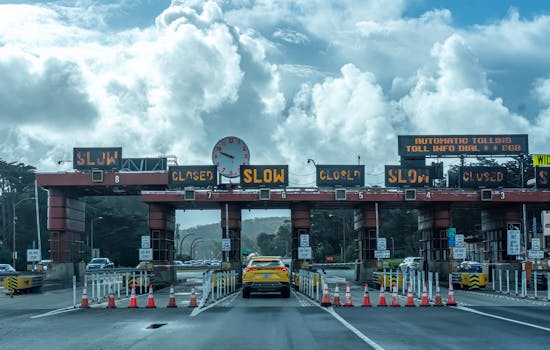
View of vehicles approaching the toll plaza at Golden Gate Bridge in San Francisco under a cloudy sky. Photo: David McElwee / Pexels
When planning your Spain road trip car hire, the advertised daily rate is often just the tip of the iceberg. A thorough understanding of potential additional costs and hidden fees is essential for budgeting and avoiding unpleasant surprises. One of the most common additional charges is for fuel. Rental companies typically offer various fuel policies: 'full to full' is generally the most economical, where you pick up the car with a full tank and return it full. 'Full to empty' means you pay for a full tank upfront and return it empty; this often includes a service charge and the fuel price can be inflated, so it's usually best to avoid unless you're certain you'll use all the fuel. Always clarify the fuel policy before you sign the contract. Another significant cost factor is additional drivers. If more than one person will be driving the rental car, each extra driver will incur a daily fee. This can add up quickly over a longer rental period, so factor it into your budget. Similarly, GPS devices, child seats, and boosters are almost always extra and can be quite expensive through the rental company. Consider bringing your own portable GPS or using smartphone apps like Google Maps or Waze, and if possible, bring your child's car seat from home to save on these costs. Many airlines allow car seats as checked baggage for free. One often-overlooked expense relates to tolls. Spain has an extensive network of 'autopistas' (motorways) that are often toll roads, particularly in Catalonia and the Basque Country. While there are also 'autovías' (dual carriageways) that are free, you'll likely encounter tolls on longer journeys. You can pay with cash or credit card at the booths, but some lanes are for automatic payment systems only. Some rental companies offer electronic toll devices (Via-T) for a daily fee, which can be convenient but also adds to the cost. Researching your route beforehand to identify toll-free alternatives or estimate toll costs is a wise move. Finally, keep an eye out for one-way rental fees if you plan to pick up and drop off the car at different locations; these can be substantial, especially for international drops or between very distant Spanish cities.

Driving in Spain: Rules, Roads, and Safety
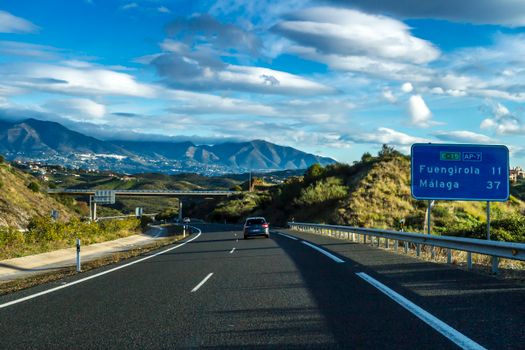
Beautiful view of AP-7 highway near Fuengirola and Málaga, with distant mountains under a blue sky. Photo: ricfer / Pexels
Driving in Spain offers a fantastic opportunity to immerse yourself in the country's diverse landscapes, but it comes with its own set of rules and peculiarities. Familiarizing yourself with Spanish traffic laws before you pick up your Spain road trip car hire will ensure a smoother and safer journey. Firstly, Spain drives on the right-hand side of the road, and overtaking is done on the left. Seatbelts are mandatory for all occupants, front and rear. Children under 12 or shorter than 135 cm must use an appropriate child restraint system and, if possible, sit in the rear seats. Speed limits are generally 120 km/h (75 mph) on motorways and dual carriageways, 90 km/h (56 mph) on conventional roads outside urban areas, and 50 km/h (31 mph) in built-up areas, though these can vary and are always clearly signposted. Speed cameras are common, both fixed and mobile, and fines can be steep. It's also illegal to use a mobile phone while driving, even hands-free, unless it's integrated into the car's system. Pull over safely if you need to make a call or check directions. Roundabouts are ubiquitous in Spain and can be confusing for first-time visitors. The general rule is to give way to traffic already on the roundabout. When entering, indicate right if taking the first exit, left if taking the last exit, and no signal if going straight. Once on the roundabout, signal right just before your exit. Parking can be a challenge in Spanish cities, especially historic centers. Look for blue zones (paid parking, usually limited time) or green zones (resident parking, often restricted to non-residents). Underground car parks are plentiful but can be expensive. Always check signage carefully to avoid fines or towing. Emergency equipment is also legally required in your vehicle. This includes two reflective warning triangles and a reflective safety vest for each occupant. Rental cars usually provide these, but it's wise to double-check. In case of a breakdown or accident, you must wear the vest when outside the vehicle on the road and place the triangles to warn oncoming traffic. For more comprehensive details on driving regulations and road signs, consulting a resource like the DGT (Dirección General de Tráfico) website or a dedicated travel guide is highly recommended to ensure you're fully prepared for your Spanish driving adventure. You might also find our general advice on safe car rental practices useful.

Essential Tips and Common Mistakes to Avoid for Your Spain Road Trip Car Hire

To ensure your Spain road trip car hire experience is as smooth and enjoyable as possible, here are some essential tips and common pitfalls to steer clear of: * **Book Early, Especially for Peak Season:** Demand for rental cars in Spain, particularly during summer, Easter, and major festivals, can be extremely high. Booking several months in advance will secure better rates and a wider selection of vehicles. Last-minute bookings often mean higher prices and limited choices. * **Understand Your Insurance:** Don't just tick the box. Review the coverage offered by the rental company and compare it with third-party options. Consider 'zero excess' policies for peace of mind. Document any existing damage with photos or videos at pick-up. * **Check the Fuel Policy:** As mentioned, 'full to full' is usually the most cost-effective. Avoid 'full to empty' unless you're absolutely sure you'll use all the fuel, or you'll essentially be paying for fuel you don't consume. * **Inspect the Car Thoroughly:** Before leaving the rental lot, walk around the entire vehicle. Check for scratches, dents, cracked windshields, and tire condition. Take photos or videos as evidence and ensure all damage is noted on the rental agreement. This protects you from being charged for pre-existing damage. * **Be Aware of One-Way Fees:** If you plan to pick up the car in one city and drop it off in another, be prepared for a one-way fee. These can vary significantly depending on the distance and popularity of the routes. Sometimes, adjusting your itinerary to a round trip can save a substantial amount. * **Avoid Airport Surcharges (if possible):** Renting directly from an airport often incurs an 'airport surcharge' or 'premium location fee'. If your itinerary allows, consider taking public transport from the airport to a downtown rental office, which can sometimes be cheaper. * **Familiarize Yourself with Spanish Road Signs:** While many signs are international, some are specific to Spain. Knowing what they mean, especially those related to parking, speed limits, and restricted zones (like ZBEs in cities), is crucial to avoid fines. * **Be Wary of Zonas de Bajas Emisiones (ZBEs):** Many Spanish cities, including Madrid and Barcelona, have Low Emission Zones. Non-compliant vehicles entering these zones can incur heavy fines. Ensure your rental car is allowed or plan routes to avoid them. * **Keep Your Documents Handy:** Always carry your physical driving license, IDP (if applicable), passport, rental agreement, and insurance documents. You'll need them for any police checks. * **Don't Rely Solely on GPS:** While GPS is invaluable, having a physical map or understanding your route beforehand can be a lifesaver, especially in areas with poor signal or complex road networks. Download offline maps for your smartphone. By keeping these tips in mind and avoiding common mistakes, your Spain road trip will be a memorable journey filled with discovery, not frustration.

Comparison

FeatureBest OptionAlternative 1Alternative 2
Insurance CoverageZero Excess / Full ProtectionCDW with High DeductibleCredit Card Insurance
Fuel PolicyFull to FullFull to EmptyPre-purchase with Refund
TransmissionManual (Cheaper)Automatic (Convenience)Electric (Eco-friendly)
Pick-up/Drop-offSame LocationDifferent Cities (One-Way Fee)Airport (Surcharge)
Vehicle SizeCompact (Cities)Mid-size (Balanced)SUV (Space/Comfort)

What Readers Say

"Renting a car for our Andalusia road trip was seamless thanks to the early booking advice. We got a great deal on a compact car, perfect for navigating the narrow streets of Granada and Seville. Highly recommend getting the full insurance."

Maria G. · Barcelona, Spain

"The Spain road trip car hire guide was incredibly helpful. We followed the 'full to full' fuel policy and inspected the car meticulously at pick-up, saving us potential charges. Our drive through the Basque Country was stunning!"

David L. · London, UK

"Thanks to this guide, I knew to get an IDP and pre-book an automatic car, which made my solo trip through Catalonia so much easier. The tips on tolls and ZBEs prevented any fines. Truly a fantastic resource!"

Sofia R. · New York, USA

"While the car rental itself was good, I wish I had paid more attention to the additional driver fees – they added up. However, the advice on checking the car for damage saved us from a dispute, so overall a positive experience."

Chris B. · Sydney, Australia

"We rented a car to explore the smaller towns of Galicia, and this guide prepared us perfectly for driving in Spain. Understanding the roundabout rules and having our reflective vests ready gave us great confidence on the road."

Elena P. · Rome, Italy

Frequently Asked Questions

What documents do I need for Spain road trip car hire?

You'll need a valid physical driving license (held for at least 1-2 years), your passport or national ID, and often a credit card in the main driver's name. Non-EU citizens should also carry an International Driving Permit (IDP) alongside their national license, as it's recommended by Spanish law.

Is an International Driving Permit (IDP) required for renting a car in Spain?

While your national driving license might be accepted by rental companies, Spanish traffic law officially requires an IDP if your license is not from an EU country or does not conform to the 1968 Vienna Convention. It's always best to have one to avoid potential issues with local authorities.

How do I avoid hidden fees when renting a car in Spain?

To avoid hidden fees, carefully read the rental agreement, understand the fuel policy (opt for 'full to full'), clarify insurance coverage (consider zero excess), inquire about additional driver fees, and be aware of one-way charges, airport surcharges, and costs for GPS or child seats. Always inspect the car thoroughly before driving off.

Is it cheaper to rent a manual or automatic car in Spain?

Manual transmission cars are significantly more common and generally cheaper to rent in Spain compared to automatics. If you are comfortable driving a stick shift, opting for a manual can save you money. If you require an automatic, book well in advance as availability can be limited, especially for smaller car categories.

Should I purchase additional insurance from the rental company or a third party?

Both options have pros and cons. Rental company insurance offers convenience and direct resolution, but can be expensive. Third-party insurance is often cheaper and provides comprehensive coverage, but you typically pay the rental company first and then claim reimbursement. Compare policies carefully to see what best suits your needs and budget.

Who should consider Spain road trip car hire?

Spain road trip car hire is ideal for travelers who want flexibility, wish to explore rural areas, small towns, or national parks not easily accessible by public transport, or those planning multi-city itineraries. It's perfect for families, couples, or groups seeking a personalized and independent travel experience.

What are the rules for Low Emission Zones (ZBEs) in Spanish cities?

Many major Spanish cities, including Madrid and Barcelona, have ZBEs to reduce pollution. Access is restricted based on a vehicle's environmental label. Rental cars should ideally have a 'B' or 'C' label (or 'ECO'/'0') to enter freely. Always check the specific city's regulations and confirm your rental car's compliance to avoid fines.

What are the common speed limits in Spain?

Speed limits in Spain are generally 120 km/h (75 mph) on motorways, 90 km/h (56 mph) on conventional roads outside urban areas, and 50 km/h (31 mph) in built-up areas. Always pay attention to road signs, as limits can vary depending on the specific road and conditions.

Ready to explore the diverse beauty of Spain at your own pace? With the right Spain road trip car hire, your adventure awaits. Plan wisely, book confidently, and embark on an unforgettable journey across this incredible country.

Topics: Spain road trip car hirecar rental Spaindriving in SpainSpain car rental tipsrenting a car in Spain
Leo List
Brampton weed
Adultwork